
Happy New Year & Upcoming Bayly Prize Ceremony
This is our first blogpost in 2026 so we’d like to wish our readers a very Happy New Year! We hope everyone is having a great start to the new year. Here at the Society, we’ve resumed our normal operations after the holiday break, and the Reading Room is once again open and welcoming visitors.
We began the year with a full house yesterday evening for a lecture by Dr Christopher Harding, cultural historian specialising in Japan. His talk explored the first century of encounters between Europe and Japan – a period rich with curiosity, misunderstanding, diplomacy, and cultural exchange. We’re grateful to everyone who joined us, both in person and online.
Dr Harding’s lecture forms part of our ongoing Japanese Studies series, co-organised with the Sainsbury Institute for the Study of Japanese Arts and Cultures (SISJAC) and The Courtauld Institute of Art. The series spans a wide range of themes within Japanese studies in the UK and beyond and details of the full line‑up are available here.
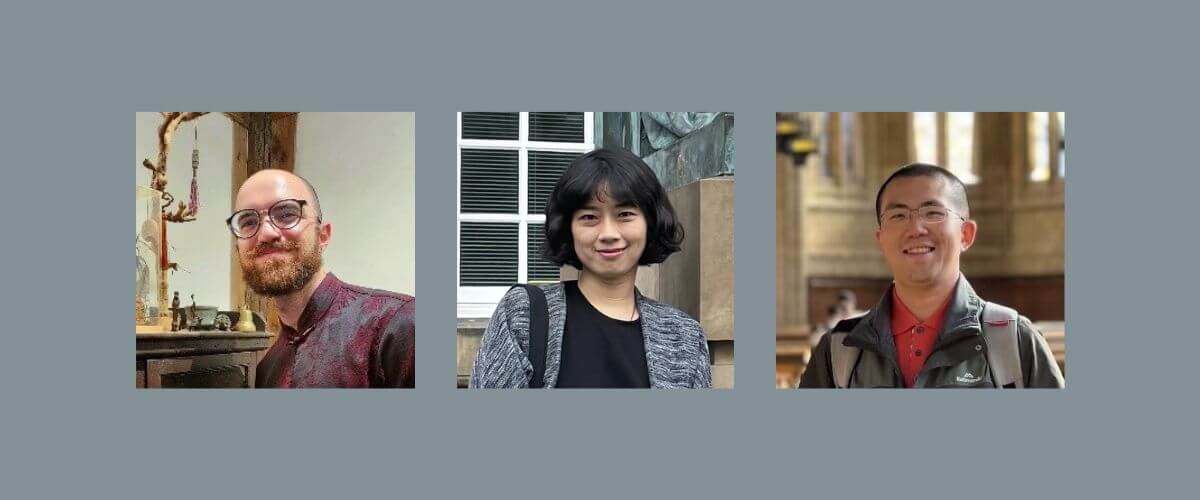
Looking ahead, we’re delighted to announce that our annual Bayly Prize prizegiving ceremony will take place in just two weeks, on Thursday 22 January. The evening will feature presentations from the winners of the 2024 Bayly Prize, whose work collectively offers a rich and multifaceted view of modern Chinese history – from the occult and visual culture to political science. Below, we’ve included brief introductions to each of the winners and their research, originally shared when the prize announcement was made last year. The ceremony promises to be a stimulating event, and we hope to welcome many of you there!
For more information about the prize, please visit this page.
~~~~~
First Prize – awarded to Dr Luis Junqueira, University of Cambridge for his thesis: The Science of the Spirit: Psychical Research, Healthcare and the Revival of the Occult in a Modernising China, 1900–1949
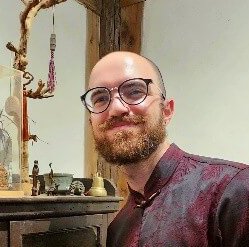
Dr Luis Junqueira is currently a D. Kim Foundation Postdoctoral Fellow at the Department of History and Philosophy of Science (HPS), University of Cambridge, where he is revising his PhD thesis for publication as a monograph, The Science of the Spirit: Psychical Research, Medicine and the Occult in Chinese Modernity. The manuscript is under review with the Cambridge University Press book series ‘Science in History’. Last month, his first edited volume, Therapy, Spirituality, and East Asian Imaginaries, was published by Amsterdam University Press.
In the coming months, he will continue at HPS under a three-year Leverhulme Trust Early Career Fellowship, alongside a new appointment as Research Fellow at Clare Hall, Cambridge. His next book project, Healing through the Mind: The Rise of Mind-Cure Movements in Modern East Asia, explores how laypeople in China and Japan reinvented their own traditions of self-cultivation by engaging with ‘mind-cure’: various popular, early 20th-century global movements championing self-care and mental healing.
~~~~~
Second Prize – awarded to Dr Xiaoqing Wang, University of Edinburgh for her thesis: Bodyscapes of Modernity: A Post-Critical Sociology of Art and the body in republican China (1912-1937)
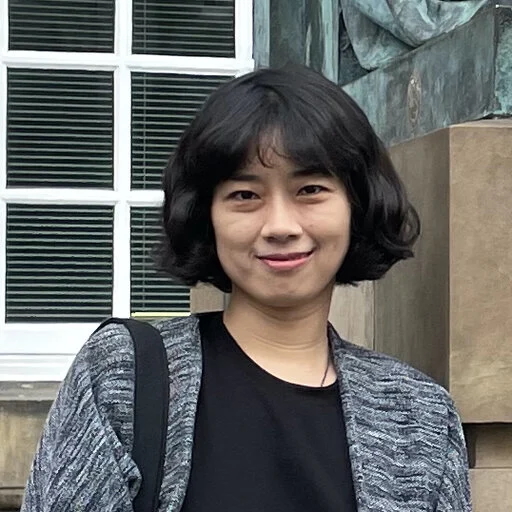
Xiaoqing Wang obtained her PhD from the University of Edinburgh in 2024. She currently delivers courses on modern Chinese history and visual culture at the University of Nottingham, Ningbo, China. A primary research project that she is currently undertaking builds on the findings of her doctoral research and continues to explore the paradoxical nature of Chinese modernity and subsequent developments in the contemporary period. A paper in progress examines the marginalisation of art in Chinese knowledge and its relationship to the process of rationalisation during the socialist era. Additionally, she is engaged in research exploring the contemporary transformation of aesthetics and visuality. Her recent papers examine the aestheticisation of cheerful faces of marginalised groups in contemporary Chinese visual culture, and the particularities of aesthetic experience in immersive exhibitions.
~~~~~
Third Prize – awarded to Dr Junda Lu, School of Oriental and African Studies, for his thesis: The State as the Celestial: Roots of Statism in Modern China, 1820-1893
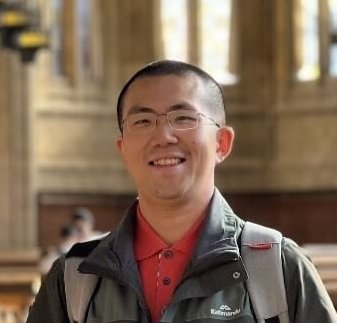
Dr. Lu is currently building upon his PhD thesis by currently preparing for a new research project that further develops one aspect of his opening chapters by delving into the underlying logic of intellectual transformations within Confucian scholarship from the 1780s to the 1820s. This project can be integrated with the former part of his thesis for the publication of a more well-rounded book, which historicizes the intellectual foundations of the modern Chinese state and re-examines ideas underlying Chinese statism apart from both the nationalist narrative of China as a unified nation and the essentialist understanding of the authoritarian character in Confucian political thinking. In this way, he wishes to situate the increasingly aggressive behavior of China’s current regime within a larger historical context to debunk the teleology in modern Chinese history wielded by political authority, which would help reveal a wider range of possibilities for multi-disciplinary research on China.
~~~~~
James Liu