
Lectures and Opportunities
This week saw the latest event in the Japan Series of Lectures in collaboration with the Courtauld Institute and the Sainsbury Institute for Japanese Studies at the University of East Anglia. The Society’s Director, Dr Alison Ohta, writes:
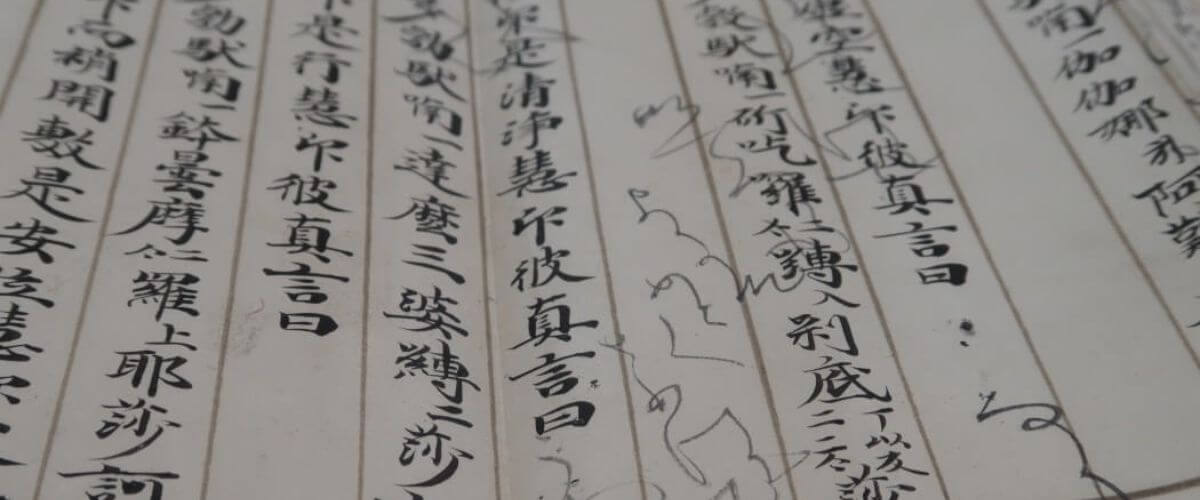
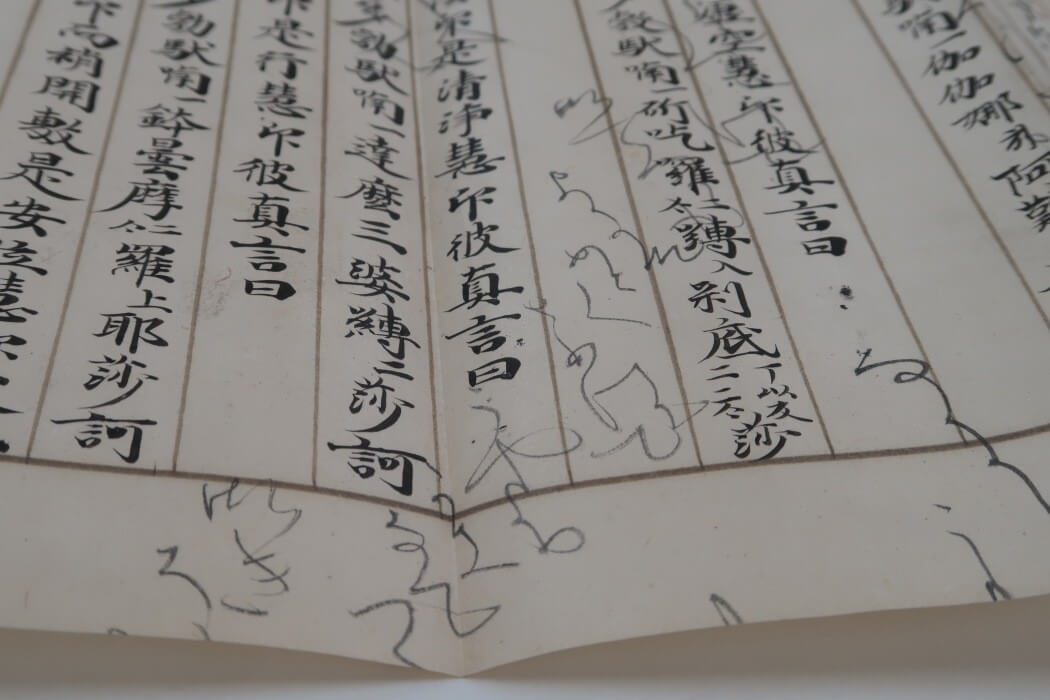
Dr Halle O’Neal’s fascinating lecture ‘Ephemeral Things: Paper, Memory, and Women Makers in Medieval Japan’, explored the role of letter sutras (shōsokukyō) in rituals of mourning after the death of a loved one. Letter writing was a central practice at the imperial courts of Kyoto and Kamakura, and following the death of a family member or loved one, letters were often preserved and transformed into memorial objects. Sutras were printed or written on the verso of the scroll—frequently embellished with gold, silver, or indigo—or written on the recto, obscuring the original contents of the letter. In other cases, letters were recycled entirely and reused for the copying or printing of sutras.
Her forthcoming monograph, Dead Letters: Reuse, Recycling, and Emotions in Japanese Buddhist Manuscripts (Harvard University Press, 2026), examines this intimate repurposing of handwritten correspondence within Buddhist death rituals.
For those who missed the lecture and would like to learn more, a related talk from the Courtauld Research Series is available online: The Many Lives of Fragmented Letters: Buddhist Death Rituals, Palimpsests, and Reuse in Medieval Japan.
—
Next week, we are pleased to host two lectures at the Society. On Monday 9 February, there will be a presentation given by Prof Agus Suwignyo on a paper co-authored with Dr Simone Gigliotti titled ‘Decolonizing Catholicism in Indonesia: Environmental Education as a Local Movement, 1950–1990s’. This presentation will examine the environmental discourses and activism of the Indonesian Catholic community from the 1950s to 1990s. The community’s interest in environmental issues ranged from the impact of wild animal hunting and disasters such as floods and landslides, to the threats that arose from industrialisation and the effects of deforestation, industrial land use, and household waste. Finally, it will propose that Indonesian Catholics’ involvement in environmental concerns was an emergent form of ‘Indonesianization,’ situated in the realities of Indonesia.
On Thursday 12 February, the Society will host the next event in our Japan series. This will see Prof Joy Hendry speaking on ‘Doing Field Research in Japan: A Long View’. The event poster explains:
‘Joy Hendry last year clocked up 50 years since she first travelled to Japan for a year’s field research in her subject of social anthropology. The methods and practice have changed a lot since that time, but essentially the aims are the same, namely to understand and explain Japanese ways of thinking and behaving in a variety of contexts. Joy’s talk will lay out these aims in more detail and explain their importance for anyone with an interest in Japan, illustrating the explanations with examples of her own long-term research over the period in rural Kyushu and seaside Chiba prefecture, and shorter observations elsewhere. She will also take a glance at the future of the subject, now very popular in Japan, both with international scholars and local ones.’
Both events are free and open to all. If you would like to join online please email mb@royalasiaticsociety.org.
Job Opening
The Society is currently looking to appoint a full-time Communication and Outreach Officer. This varied and rewarding role combines the administration of the Society’s journal, published in conjunction with Cambridge University Press, and responsibility for the organisation and administration of the Society’s events and activities. Further information is available here. Please note applications close on 16 February.
Edward Weech